
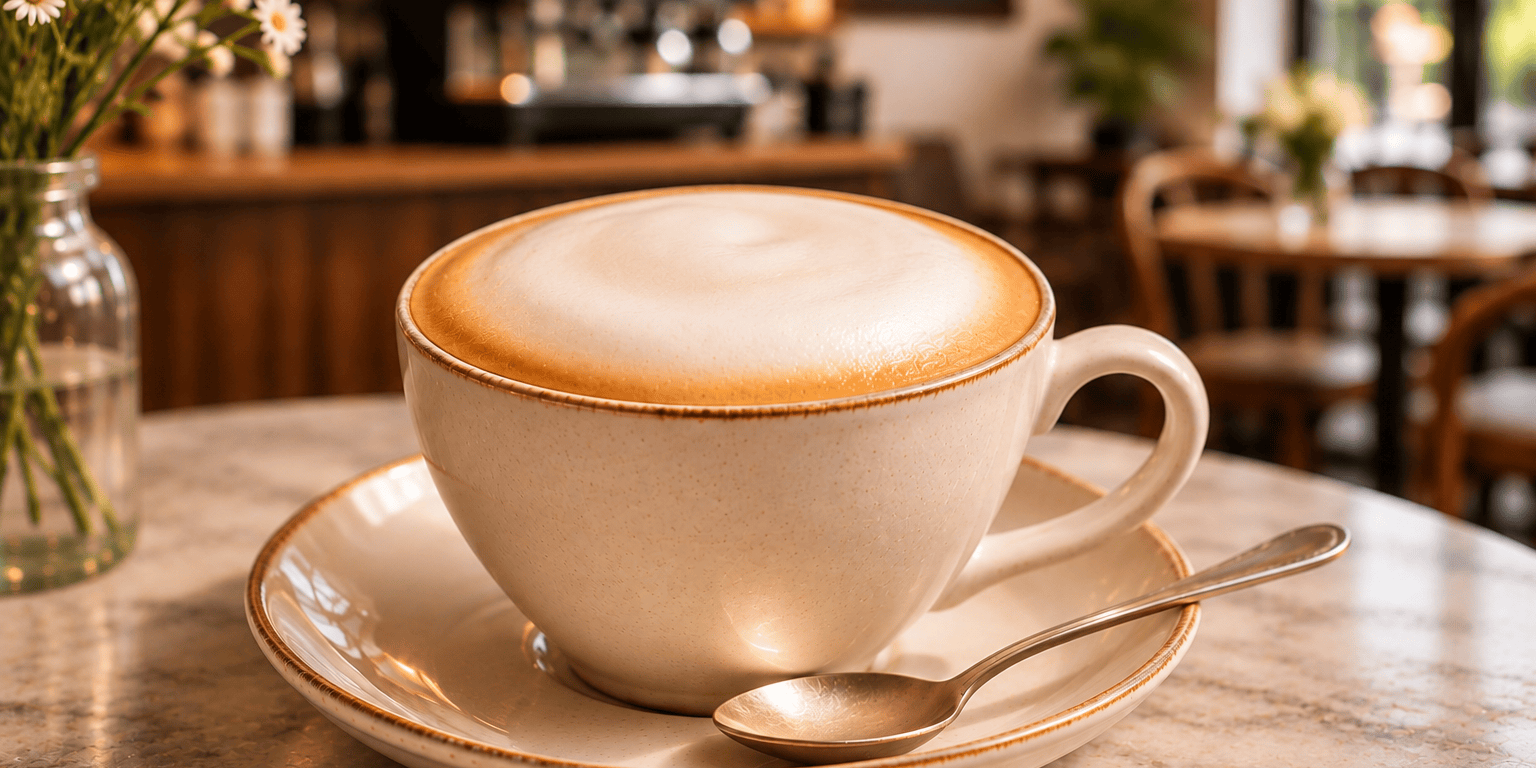
From the coffee houses of Vienna to the cafés of Italy, discover the story behind one of the world’s most recognisable coffee drinks.
There is something rather comforting about a cappuccino. A freshly brewed espresso, warm steamed milk and a delicate layer of foam come together to create a drink that has become part of everyday coffee culture.
But where did the cappuccino come from? What makes a good one? And can you still enjoy something similar if you don’t drink dairy or milk?
Let’s take a closer look.
1. Where did the cappuccino come from?
Although the cappuccino is strongly associated with Italy, its history is a little more complicated.
One of its earliest predecessors was the Kapuziner, a coffee drink served in Viennese coffee houses in the 18th century. It was traditionally prepared with coffee, cream and sugar, sometimes with spices.
The name has an interesting connection to the Capuchin friars, a branch of the Franciscan order. Their distinctive brown robes and hoods are believed to have inspired the name, referring to the colour of the coffee when cream was added.
The cappuccino we recognise today developed in Italy during the 20th century, as espresso machines became more widespread and steamed milk and milk foam became central to its preparation.
From Italian coffee bars, the cappuccino gradually travelled around the world, becoming a favourite well beyond its European origins.
2. What makes a proper cappuccino?
A cappuccino is not simply an espresso with milk poured on top.
It is a carefully balanced combination of three elements:
- Espresso: The coffee foundation, providing intensity and flavour.
- Steamed milk: Adds sweetness, body and a creamy texture.
- Milk foam: Creates the characteristic soft, velvety top.
A traditional Italian cappuccino is relatively small, usually served in a cup of approximately 150–160 ml.
The milk should be steamed to create a fine, silky microfoam rather than large, dry bubbles. When poured correctly, the milk and foam integrate with the espresso, producing a smooth and balanced drink.
The aim is not to hide the coffee beneath a mountain of foam, but to bring the flavours together.
3. What should a cappuccino look like?
A well-prepared cappuccino should be appealing before you even take your first sip.
Look for:
- A smooth, creamy surface.
- Fine, consistent bubbles rather than large, airy ones.
- A white milk surface with a delicate brown espresso-coloured border.
- A balanced appearance, without excessive foam spilling over the cup.
- A pleasant contrast between the coffee and milk.
Latte art is often a lovely finishing touch. A heart, rosetta or tulip can demonstrate good milk texture and pouring technique.
However, latte art alone does not guarantee a good cappuccino. The taste and texture matter much more.
4. Can you have a cappuccino without dairy milk?
Absolutely. You don’t have to use cow’s milk to enjoy a cappuccino.
Plant-based alternatives have become increasingly popular in independent coffee shops, with several options available.
Oat milk
One of the most popular alternatives. Barista oat milk can produce a creamy texture and a lovely layer of foam. It is often a particularly good choice for cappuccino.
Soya milk
Can create a good foam and has a slightly more distinctive flavour. Barista versions are designed to work better with espresso.
Almond milk
Offers a lighter texture and a characteristic nutty flavour. It may produce less stable foam than some other alternatives.
Coconut milk
Adds a recognisable coconut flavour, creating a rather different coffee experience.
The important thing is to choose a barista version, as these are formulated to work better with coffee and steaming.
5. What if you don’t want any milk at all?
Here is an important distinction: without milk or a milk alternative, it is no longer technically a cappuccino.
But there are other wonderful espresso-based drinks to explore.
- Espresso: A small, concentrated coffee that allows you to appreciate the character of the beans.
- Lungo: An espresso-style coffee extracted with more water, producing a longer drink.
- Americano: Espresso diluted with hot water, creating a larger, milk-free coffee.
- Espresso macchiato: Espresso marked with a small amount of milk foam. It is not completely milk-free, but uses considerably less milk.
If you enjoy the coffee flavour but prefer to avoid milk altogether, an Americano or espresso might be worth trying.
6. A cappuccino is more than just coffee
From its historical roots in European coffee houses to the modern independent café, the cappuccino has evolved considerably.
Today, every coffee shop may have its own interpretation, influenced by the beans, the espresso recipe, the milk and the barista’s technique.
And perhaps that is part of what makes coffee culture so interesting: even a familiar drink can offer a different experience from one café to another.
Next time you order a cappuccino, take a moment to look at it, smell it and taste it. There is a little more to that cup than you might think.
The Cup Guide — Discover coffee differently.

